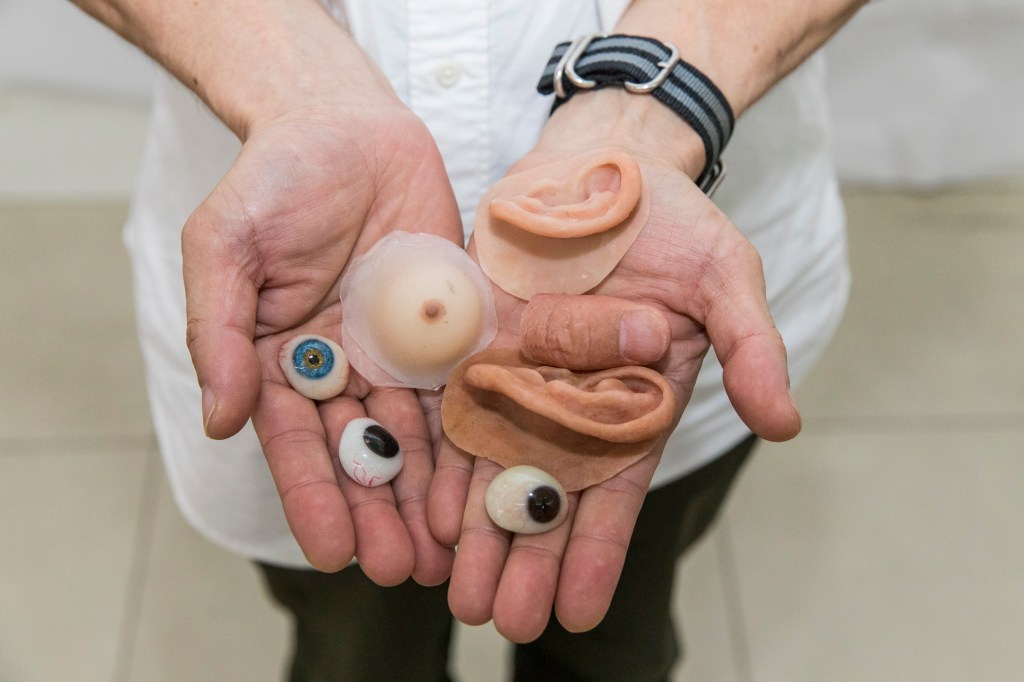
Various Prosthesis designed by Mr Koji Yimata – Photo by Andrea Francolini
27 June 2019: A contingent of Operation Restore Hope volunteers consisting of Dr Darryl Hodgkinson (Founder and Head Plastic Surgeon), Katherine Hodgkinson (Director), Alistair D’Vaz (Senior Anaesthetist) and myself:- Grant Brown (Director) visited a Philippine Children’s Medical Center (PCMC) screening day.
PCMC and ORHA work hand-in-hand to provide free surgery and ongoing care to many children suffering from complicated craniofacial conditions that are inoperable in a one week mission environment.
During this visit to Quezon City I had the opportunity to meet a very inspiring and interesting individual and felt compelled to share the store of Koji Miyata.
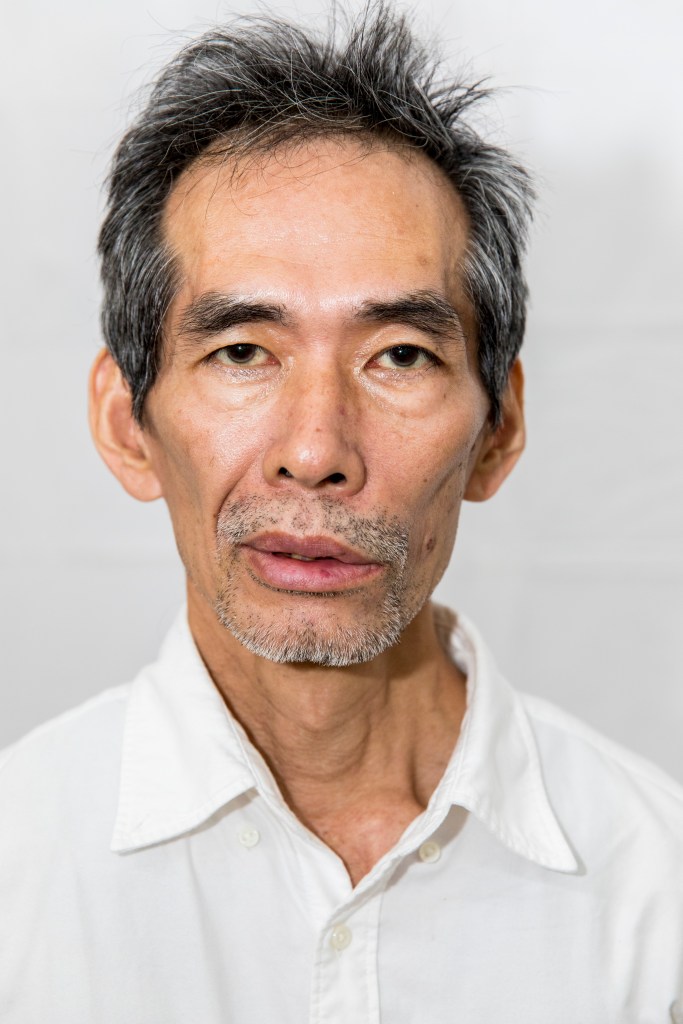
Portrait of Koji Miyata – By Andrea Francolini
Dr Koji Miyata was born in Nagasaki Japan and studied at Aishi College of Dental Technology in Tokyo to become a Dental Technologist.
In 2006 Dr Miyata moved to the Philippines and settled in Manila where he commenced teaching dental technology at Emilio Aguinaldo College school of Dentistry. It was here in Manila where Dr Miyata noticed a the desperate need for prosthetic technicians not only in the Philippines but throughout Asia.
Dr Miyata embarked on a quest apply the various techniques he had acquired through years of experience in Dental technology and refine these skills to develop prosthesis for those suffering with life changing injuries or have been born with various deformities.
The initial process sounds simple in theory;
Take an impression of a body part
Create a mould
Design the body part out of wax from the mould.
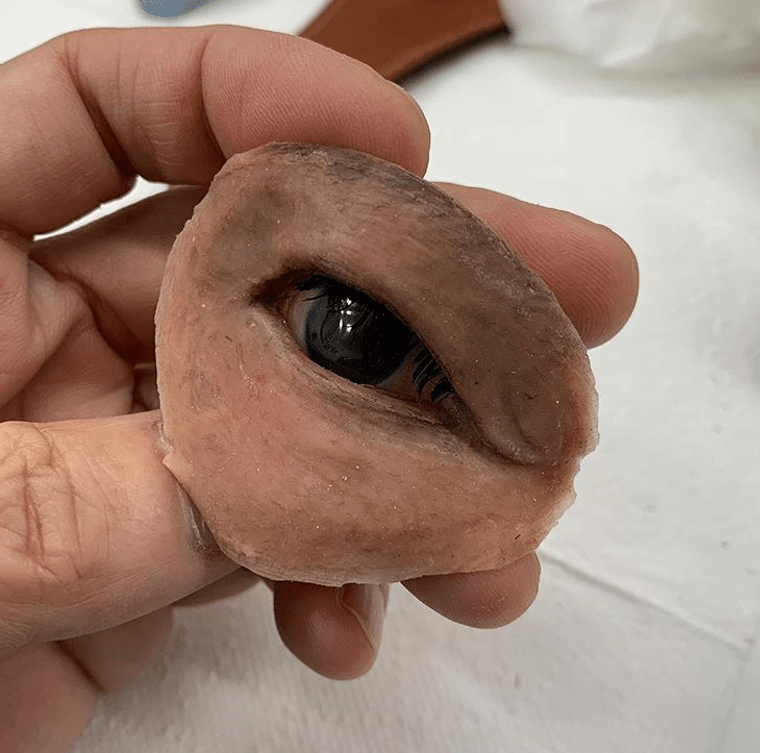
However one must not overlook the attention to detail that goes into every piece that Dr Miyata designs. From the finger prints on the finger to the texture of the skin, to the ever so subtle veins that run along the surface of the eye, no detail is overlooked and it’s the detail that is critical in giving the prosthetic the most authentic and realistic design possible.
Prosthetic eye and surrounding tissue
As technology continued to improve Dr Miyata adopted new ways of developing his prosthesis.
In 2017 the introduction of 3D printing aided in the development of creating plastic moulds which were then used to create the silicone prosthesis.
At present there are over 100 people benefiting from Dr Miyata’s prosthesis. Most of these people are children however some others include women who have required a mastectomy due to breast cancer and Dr Miyata has even created artificial palates for dogs suffering from cleft palate.
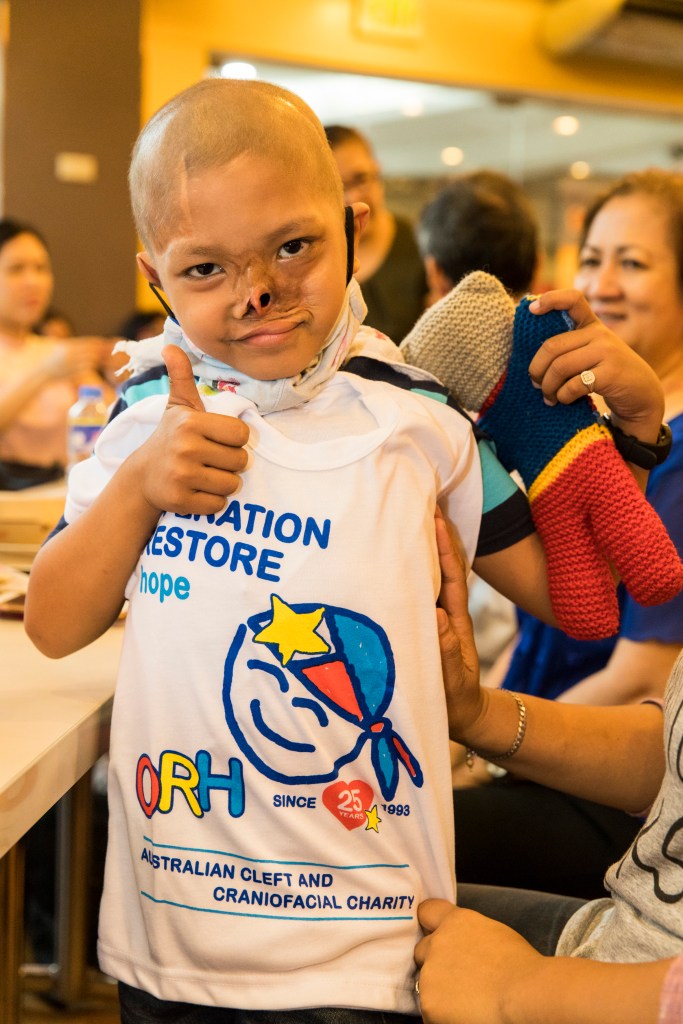
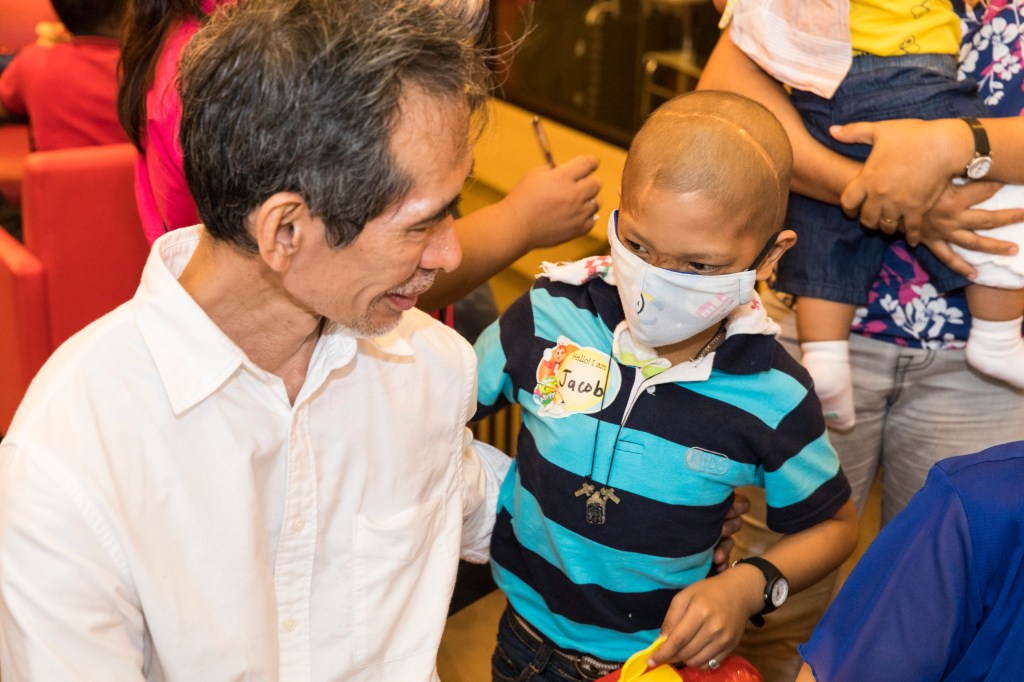
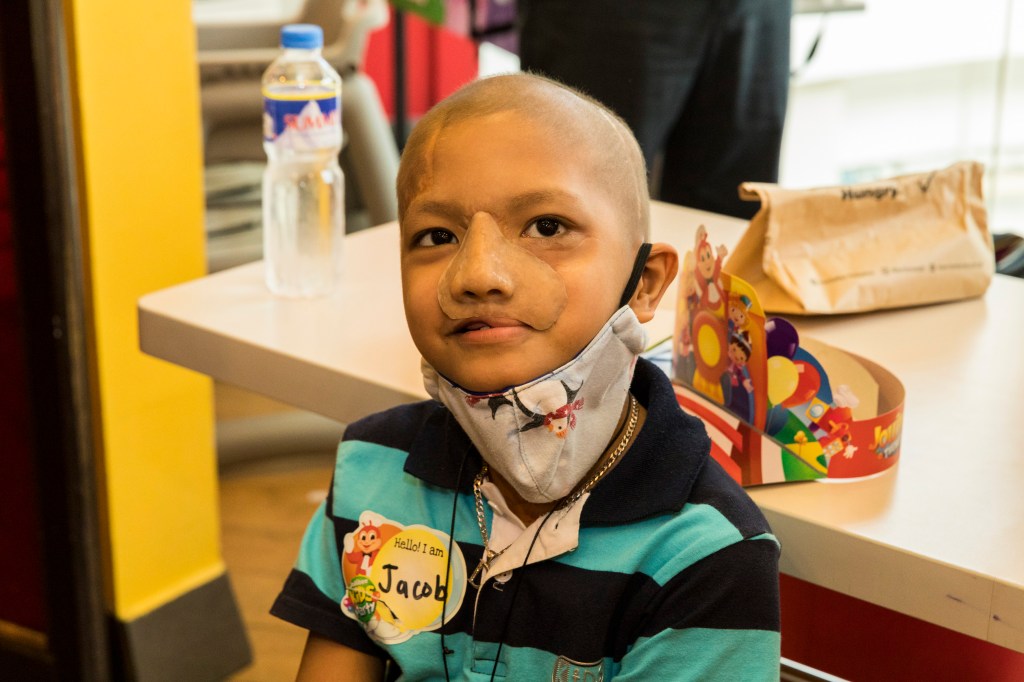
One of Dr Miyata’s patients is a very brave 8 year old boy by the name of Nhiel Jacob who suffers from an incredibly rare form of cancer known as Rhabdomyosarcoma (RMS).
8 Year Old ‘Nheil’ at PCMC Photograph by Andrea Francolini
RMS is an aggressive and highly malignant form of cancer that develops from skeletal (striated) muscle cells that have failed to fully differentiate. It is generally considered to be a disease of childhood, as the vast majority of cases occur in those below the age of 18.
Nhiel and Dr Miyata at PCMC – Photograph by Andrea Francolini
RMS has caused Nhiel Jacob to lose his nose and undergo ongoing chemotherapy through PCMC.
Dr Miyata designed a custom prosthetic nose to fit Nhiel’s face and he will continue to modify his prosthesis as Nhiel Jacob continues to grow.
Nhiel’s latest prosthetic nose made by Mr Miyata – Photograph by Andrea Francolini
Today Dr Miyata operates a business in Manila called Sakura Prosthetics Medical Services. He is now training the next generation of technicians who will be able to provide prosthesis to those in need throughout in Indonesia, Japan, the Philippines and Taiwan.
You can see more of Dr Miyata’s amazing prosthesis by following him on his Instagram and Facebook.
An Interview with Dr Darryl Hodgkinson (Founder of Operation Restore Hope)
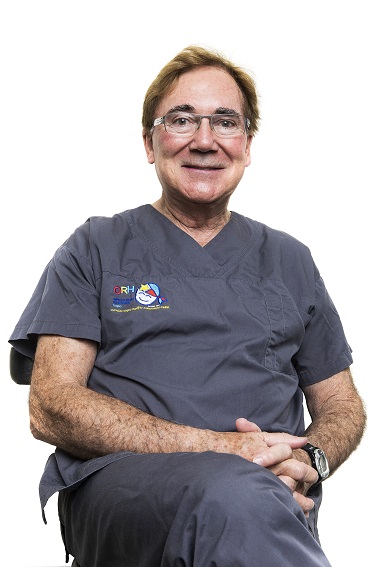
PORTRAIT – Darryl Hodgkinson Plastic surgeon and founder of the Australian charity Operation Restore Hope which works in the Philippines by operating on children with cleft lips and palates. Sydney, Double Bay – 24 April 2019 Sydney (Photo by Andrea Francolini)
Written by Grant Brown – Director of Operation Restore Hope:
Several months ago Tony Hall from “We Made The Change” approached me with the ambition to link in with charitable leaders throughout the Philippines and help promote them. Tony recognised Dr Hodgkinson’s long term commitment to helping children in the Philippines and subsequently requested the following interview with him.
This interview is an insight behind the driving motivation of Operation Restore Hope along with the challenges of coordinating a charity from Australia to the Philippines.
Q: “What inspired you to help kids with cleft lip and palate”?
Tony Hall
A:“I was trained in the United States and no matter where you train in the first world you don’t see many children with cleft lip or palate as the birth rate is much lower than in the third world.
I had an opportunity of going to Mexico when I was in my late twenties and it was there where I worked with a very inspirational surgeon in Mexico City, doing amazing work with underprivileged children with cleft lip and palate. I guess he inspired me as to how much difference it made to the poor to have a child converted from basically somebody hard to look at and not functioning properly to somebody who has normal potential in their life. So what inspired me was that you could make such a profound difference at such an early age before the child had developed and so I became very interested in this. It’s actually a very complicated operation and so is the cleft palate operation. I felt that I had been trained by some of the best people in the world to do this and when I got back to Australia of course I didn’t see many cases and I felt that it would be a waste of my efforts if I didn’t continue to do this and there was such a need in underprivileged countries, especially in Asia. It was just by serendipity I managed to come to the Philippines about 25 years ago and since Operation Restore Hope and has helped operated on nearly thousand children by not myself individually but by enthusiastic, young teams of surgeons, anaesthetists and nurses who come and work with the locals as much as possible to operate on children suffering from these facial deformities.”– Darryl Hodgkinson
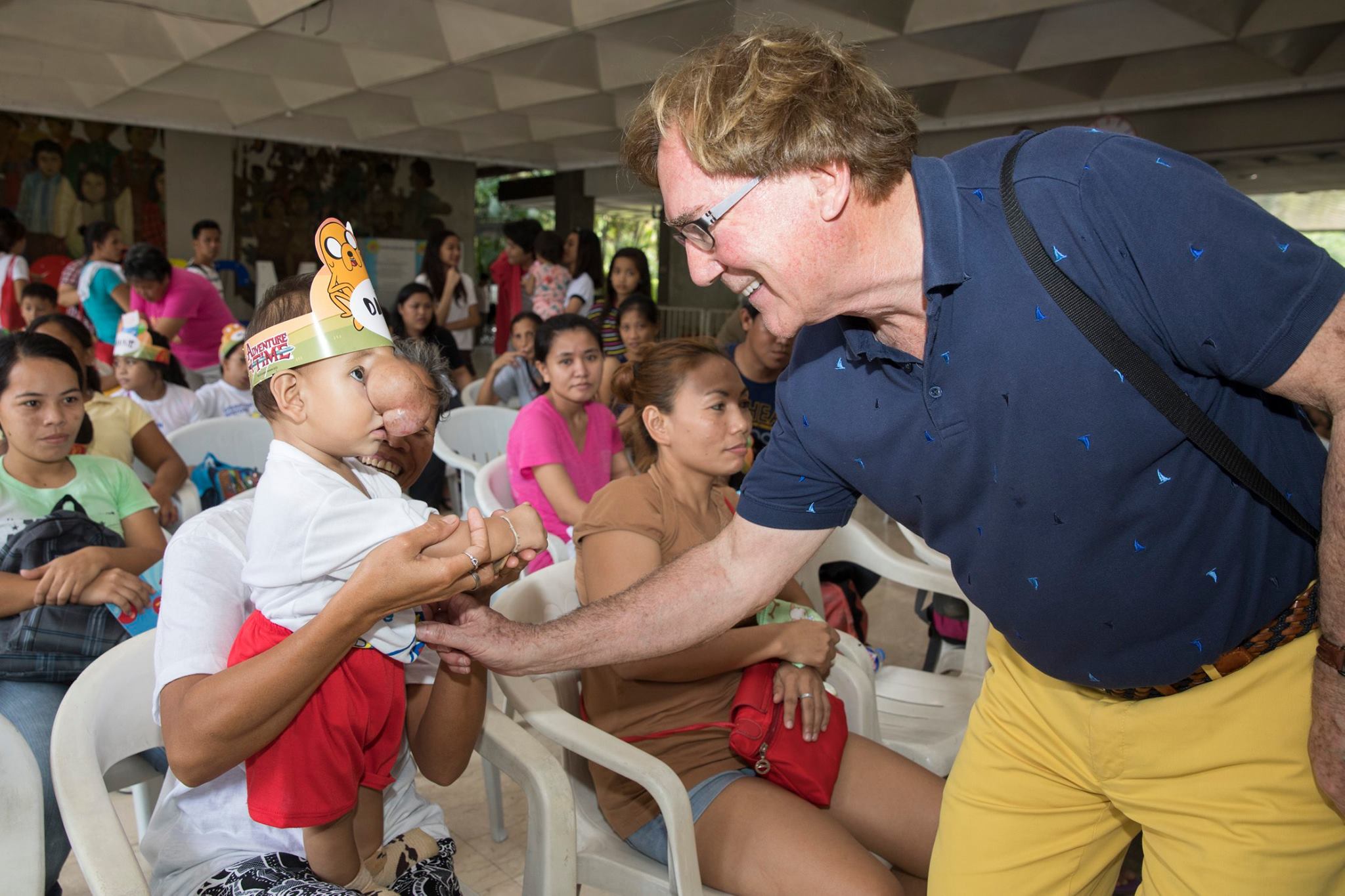
Dr Darryl Hodgkinson meeting a new patient pre-op. Lapu Lapu, Cebu, Philippines – September 2014 (Photo by Andrea Francolini)
Q: “Why did you choose the Philippines”?
Tony Hall
A:“As young plastic surgeon having worked in Mexico City on cleft procedures I went into practice in the United States and there wasn’t a cleft lip and palate in my area so we started one there. At the time I was doing one or two cases per month and I felt I should go to other third world countries. I had opportunities to go to Guatemala, India and Nepal where I did this work as a pretty much a solo guy with a bag and instruments up until the late 80’s. The story on how I managed to get involved in the Philippines is interesting; one of my patients had a nasty melanoma on his face and I treated him, he told me that he has a business in Cebu making rattan furniture and bringing it back to Australia and that there are plenty of people there suffering from cleft lip and palate. So we went there on exploration to have a look and talked to the administration at the main hospital to offer our services for free, to come over and spend a week in their hospital and that’s how it all started. We later found we were offered a smaller peripheral hospital in Lapu Lapu on the outskirts near the airport. It was very convenient and the English spoken there made it much easier to coordinate logistics. Twenty one years later we were still working there and also during this time we opened up to other parts of the Philippines mainly in metro Manila, Paranaque and Caloocan and as our organisation has grown we have been able to facilitate requests to other parts of the Philippines”. – Darryl Hodgkinson
Q: How did you start, did you have contacts in the Philippines to help you?
Tony Hall
A:“We’re in constant contact with our NGO partners, of course with social media and email it is a lot easier these days. In particularly the PCMC (Philippine Children Medical Center) we are constantly working on patient requests to fund surgeries under the banner of Operation Restore Hope. With the expansion of the internet over the years the poor are now able to contact us directly and we are able to put them onto our charity or if not other charities that are working in the area. This is where I see the advantage of what you are trying to do by combing all the charities so that people do not slip through the cracks so that the poor can be directed to the charity that they need.” – Darryl Hodgkinson
Dr Darryl Hodgkinson reviews and screens patients at Philippine Children’s Medical Center Quezon City, Manila, Philippines – 27 April 2017 (Photo by Andrea Francolini)
Q: “How long did it take to prepare the registration of the charity”?
Tony Hall
A: “In Australia you can register a charity to raise funds however the people who donate to you cannot claim as a tax deduction unless the charity is Aus-Aid endorsed. So in the first ten years we were able to raise money however the donations were modest because it is not easy to get tax deductible Aus-Aid status. At this time we realised the we can do this but we need to spend more time with the Australian embassy in Manila. The Ambassadors were good, they came down and saw what we were doing and the Trade emissary was also very helpful. Katherine Hodgkinson put in a massive amount of effort in and managed to get a legal firm to put in a lot of their time and effort and after ten years we were able to achieve ‘Aus-Aid endorsement’. This made a massive difference to people donating to us and our capacity increased significantly after that point. In short it takes a long time, you have to really prove that you are on the ground and have a self-sustaining project that shows that if we are not here it can continue on. It is really important to have a local NGO partner involved and active in helping us. We were lucky for twenty years, we had the Metro Rotary Club in Cebu supporting us along with the Medical Association in Cebu and the local plastic surgeons were also very positive about what we were doing, so that all compounded to lead to the long term commitment and success of our charity”. – Darryl Hodgkinson
Dr Darryl Hodgkinson on one of the earlier missions for Operation Restore Hope – Philippines
Q: “What drives you to continue building and operating the charity”?
Tony Hall
A:“One of the growing forces is the success of it long term and the amount of respect and appreciation of the parents. There is no substitute for the amount of the joy you see in the face of a parent whose child has had their cleft repaired. The other thing that keeps me driving forward is the young surgeons, anaesthetists, nurses and administrators who are enthusiastic and would like to help but need help on how to get started. I want to keep enthusiasm up as time goes on to keep for these young people with my help of Katherine Hodgkinson and I too direct them into a successful future for Operation Restore Hope“. – Darryl Hodgkinson
Dr Darryl Hodgkinson and Dr Anton Fries with a very happy family post-op Lapu Lapu, Cebu, Philippines – September 2014 (Photo by Andrea Francolini)
Q: “How did you manage the charity and continue with your busy work as a Doctor”?
Tony Hall
A: “Something happens for Operation Restore Hope every day so I just integrate it into my day’s activities and put the time in that is necessary. The biggest problem is registering the doctors and nurses, there is a lot of paper work to constantly go through and whilst I wish this wasn’t so the administrators can be helpful. I think in the future Grant Brown will be very helpful here.
You have to be a mover and a shaker to make things happen and ensure the registration is all straight so that when we arrive there are no boxes that haven’t been ticked. The other thing that takes time is getting all the equipment, disposables and medication that you might need. It’s a bit like MASH in that you have to pre-screen and work out how many operations you will be conducting and then determine what you will need in the form of soft goods, antibiotics, medicines, suture material and personnel. It becomes easier the more you do it but you have to be prepared for small glitches along the way which like in the way of equipment breaking down. So it is a day by day thing which we integrate into our work. If you have a mission you can’t just decide to do it ‘willy-nilly’, you have to put the time in planning. It’s not a good idea doing a lot of missions in a hospital to as it throws the whole hospital out for the local doctors, so you don’t want to over burden the system so take your time slowly, slowly so that in six to nine months you’ll have all the paper work sorted, all equipment sorted, all your soft goods sorted and you’ll be ready to go”. – Darryl Hodgkinson
Many children suffering with facial deformities in the Philippines would go without the help they so desperately need if it wasn’t for charities such as Operation Restore Hope – Lapu Lapu, Cebu, Philippines – September 2014 (Photo by Andrea Francolini)
Q: “Do you have any suggestions for others who may want to start a charity in the Philippines”?
Tony Hall
A:“Well actually we do help other people who are doing start-ups and we give advice on how to start slow, how to raise funds, how to get people on the ground in the recipient country that you can trust. Don’t commit too much too early and don’t be too political and try to get the foundations of your contacts solid to start with. First when you have a passion for it find other people on the ground in the Philippines or in Australia to facilitate. You will get quite a few knock backs, you can go in and people will say “that’s covered” or “we don’t need that” however once you look around you can discover that your services are definitely needed and valuable in an area. You have to have a relationship with an NGO (Non-Government Organisation), the first thing you would do is to find out what NGO’s need and you can start to do this by search on Google and see what you can offer to them which they don’t already have. Do your research and show your passion. I would also suggest spending some time on the ground in the country that you are looking to help. Make sure you like going there because if you don’t like it there then it’s not going to last long term. Try to make a commitment in charity more than a year or two so try to make it a something you can develop and work with over a long period of time rather than just make a splash in a pan. I think the third world is full of people who go in well-intentioned, make a splash and then they’re gone and all you’re left with is a skeleton of their infrastructure that nobody can use so think about what you want to do long term”. – Darryl Hodgkinson
You can show your support by donating to Operation Restore Hope by visiting the following website: www.operationrestorehope.org/
Dr Darryl Hodgkinson watches on as a young team of surgeons, anaesthetists and nurses that he handpicked operate on another child in need of help. Las Piñas City Medical Center, Las Piñas , Manila, Philippines – 20 May 2018 (Photo by Andrea Francolini)




 Operation Restore Hope